
Flex-Safe vs Steel Barricades vs Traffic Cones
Including Type1 Barricades, and Orange Traffic Cones
When selecting portable safety equipment, most buyers are choosing between three primary options:
-
Folding barricades
-
Steel barricades (including
-
Traffic cones (including orange traffic cones, and commonly searched variations like treaffic cones and orange trzffic cones)
Each serves a different purpose. The right choice depends on whether your goal is warning, guidance, or true access control.
This page compares all three based on real-world performance.
Side-by-Side Comparison
| Feature | Flex-Safe Folding Barricade | Steel Barricades | Traffic Cones (Orange Traffic Cones) |
|---|---|---|---|
| Primary Purpose | Restrict access and control movement | Restrict access; long-term or roadway use | Warn and guide |
| Authority Level | High | Very high | Low |
| Physical Barrier | Yes | Yes | No |
| Durability | High durability for repeated deployment | Extremely durable; heavy-duty construction | Moderate; crack, fade, and wear over time |
| Portability | Excellent; designed for frequent movement | Poor; heavy and difficult to move frequently | Excellent |
| Transportability | Fits in SUVs, pickups, patrol vehicles | Requires trucks, trailers, or multiple trips | Easy vehicle transport |
| Weight | Lightweight; single-person handling | Heavy; often requires two people | Lightweight |
| Storage Efficiency | Compact folding design | Bulky; consumes significant storage space | Stackable |
| Setup Speed | Seconds | Slower; requires lifting and positioning | Seconds |
| Ease of Deployment | Very easy | Difficult for frequent deployment | Very easy |
| Visibility | High visibility with integrated signage | High visibility with reflective panels | Moderate visibility |
| Best Use Case | Mobile safety, facilities, events, rapid response | Road construction, long-term closures | Temporary warnings, traffic guidance |
Understanding Steel Barricades
Steel barricades — especially Type I barricades — are commonly used in roadway and construction environments.
They provide:
-
Excellent structural durability
-
High visibility when equipped with reflective panels
-
Strong physical access restriction
However, they also present operational challenges.
Limitations include:
-
Heavy weight
-
Difficult transport
-
Large storage requirements
-
Slower deployment
Because of these factors, Type I barricades are often used for planned, longer-term placement rather than rapid response.
Understanding Traffic Cones: Orange Traffic Cones and Large Traffic Cones
Traffic cones, especially standard orange traffic cones, are widely used because they are:
-
Lightweight
-
Inexpensive
-
Easy to deploy
-
Easy to transport
They are effective warning devices.
However, traffic cones do not physically prevent entry.
This limits their effectiveness when true access control is required.
Even highly visible cones — including those searched as orange trzffic cones or treaffic cones — primarily provide guidance, not restriction.
Where Flex-Safe Fits Between These Options
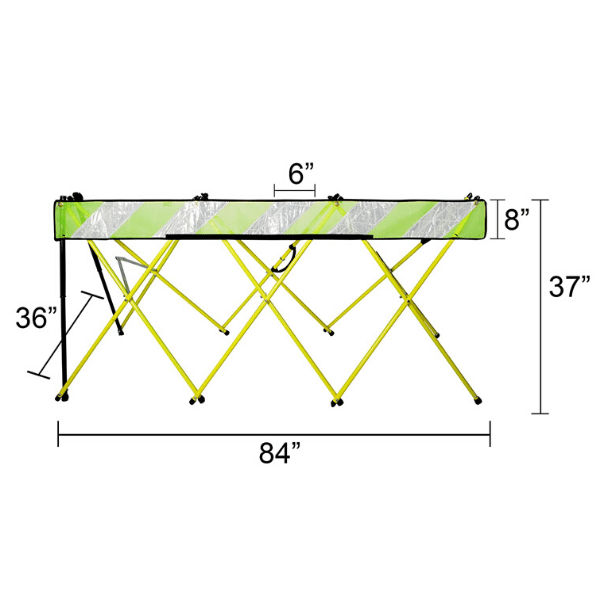
Flex-Safe folding barricades were designed to bridge the gap between cones and steel barricades.
They provide:
The control of a barricade
with
The portability of traffic cones
This combination makes them highly effective in environments where safety must be deployed quickly and frequently.
Durability Comparison
Steel barricades (Type I barricades)
Offer maximum structural durability but are not optimized for frequent movement.
Traffic cones
Wear out faster and often require replacement.
Flex-Safe barricades
Provide long service life with durability designed specifically for repeated deployment.
Portability and Transport Comparison
Traffic cones
-
Extremely portable
-
Easy vehicle transport
Steel barricades
-
Heavy and difficult to transport
-
Often require dedicated transport
Flex-Safe barricades
-
Lightweight
-
Easy to transport in standard vehicles
-
Designed for mobile teams
This makes Flex-Safe practical for daily operational use.

How many barricades or cones can fit in your vehicle?


Storage Comparison
Storage is one of the most overlooked operational factors.
Traffic cones
-
Stack efficiently
Steel barricades
-
Require significant storage space
Flex-Safe barricades
-
Fold compactly
-
Store efficiently in vehicles and facilities
This improves accessibility and deployment readiness.
Setup Speed and Ease of Deployment
Traffic cones
Fastest deployment.
Flex-Safe barricades
Nearly as fast.
No tools.
No assembly.
Steel barricades
Slowest deployment.
Heavy lifting required.
This difference affects how quickly hazards can be secured.
Visibility and Safety Communication
Traffic cones
Provide visual warning.
Steel barricades (Type I barricades)
Provide strong visual and physical control.
Flex-Safe barricades
Provide both visibility and rapid deployability.
This improves hazard communication and compliance.
Real-World Use Recommendations
Use Traffic Cones When:
-
Marking temporary hazards
-
Guiding traffic
-
Providing visual warnings
Use Steel Barricades (Type I Barricades) When:
-
Long-term placement is required
-
Maximum structural strength is needed
-
Transport and storage are less frequent concerns
Use Flex-Safe Folding Barricades When:
-
Rapid deployment is required
-
Barricades must be transported frequently
-
Storage space is limited
-
Mobile safety response is important
Why Many Organizations Are Moving Beyond Cones Alone
Traffic cones are effective warning tools.
But when access must be restricted, barricades provide greater protection.
Flex-Safe allows organizations to upgrade from cones without sacrificing portability.